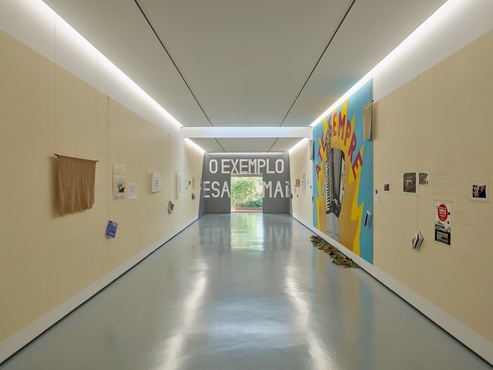
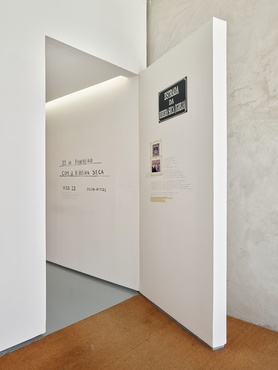
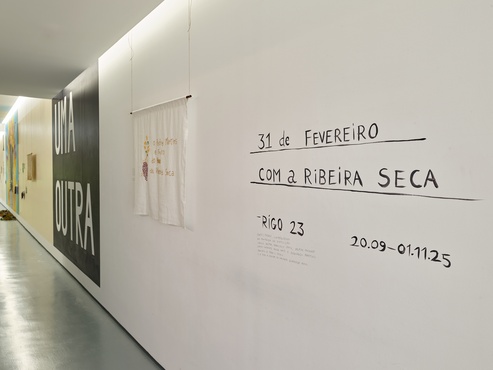
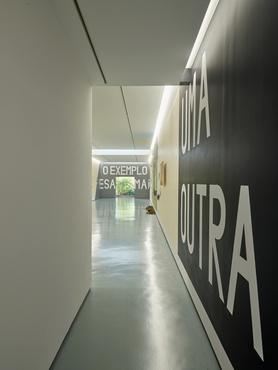
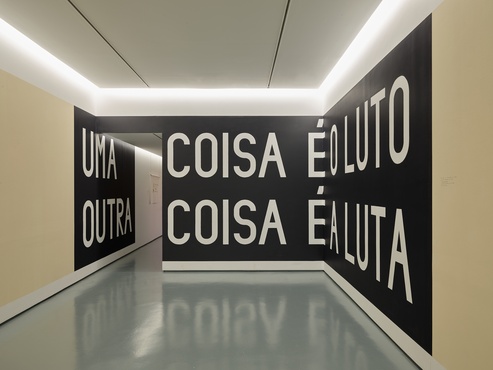
From September 20 to October 31, 2025, Galeria Quadrado Azul hosts the exhibition “31 de Fevereiro com a Ribeira Seca” by Madeiran artist Rigo 23, his third solo show with the gallery.
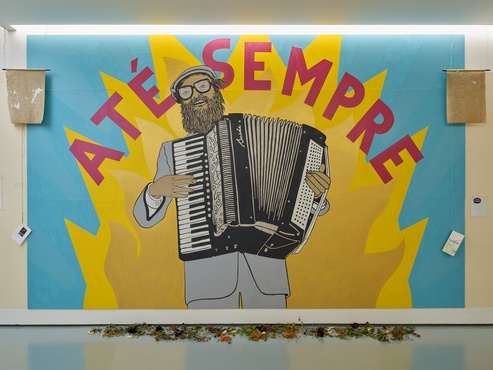
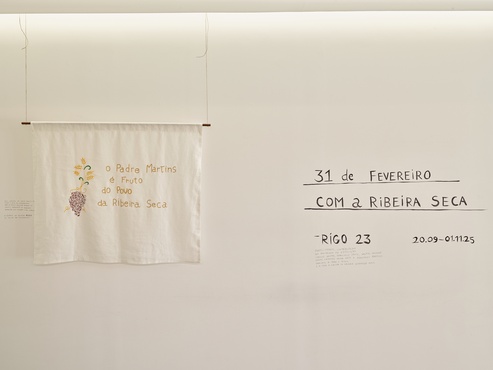
Resuming his collaboration with the community of Ribeira Seca, at the top of the Machico valley on the southeast coast of Madeira Island, Rigo has conceived an exhibition that— through the unexpected intervention of fate—also serves as a tribute to the recently deceased Father José Martins Júnior (1938–2025), an emblematic figure in Madeira’s public life after the April 25 Revolution and parish priest of that community for more than half a century.
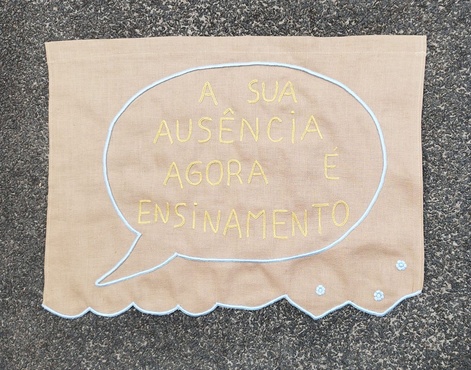
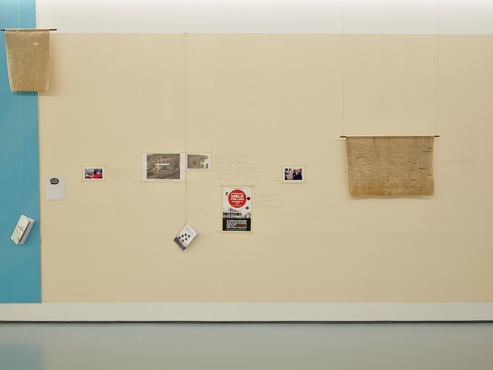
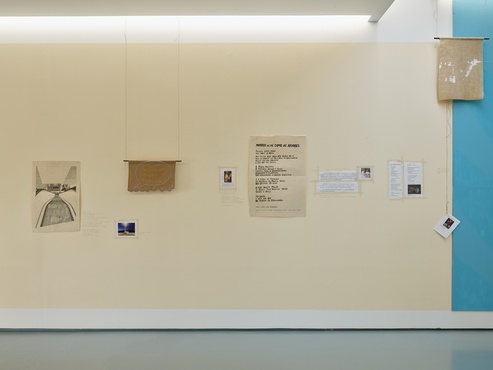
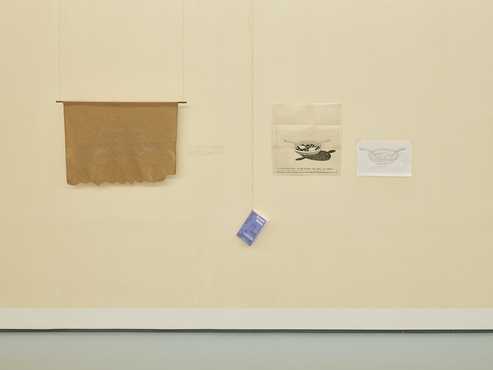
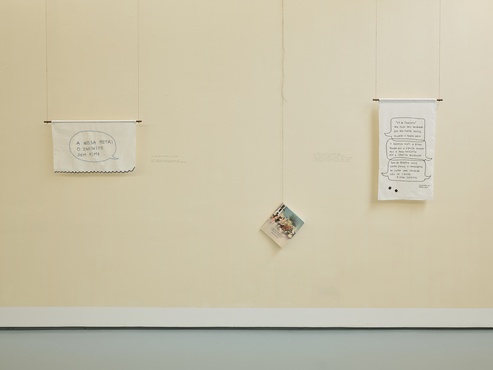
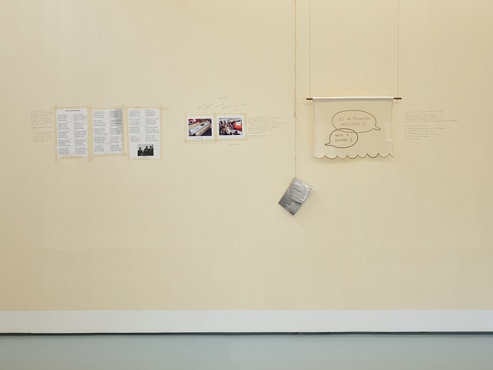
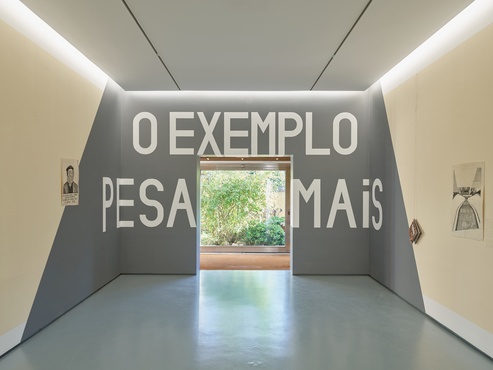
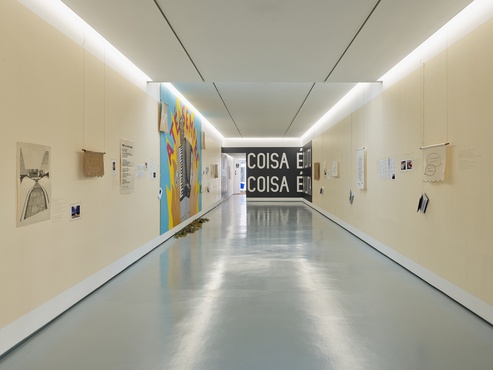
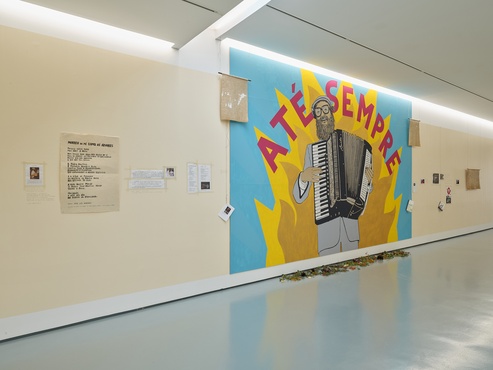
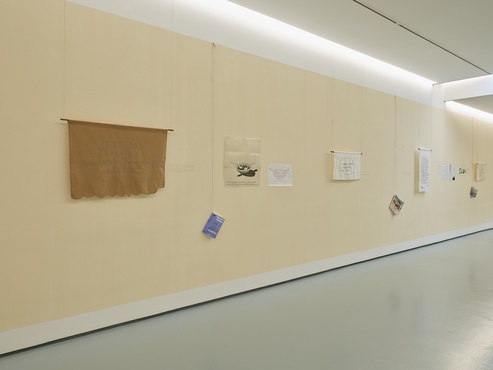
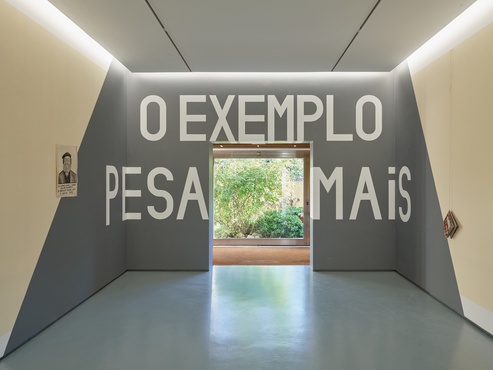
As is common in his practice, Rigo intervenes directly in the gallery’s architectural space with three murals, and presents a series of drawings and embroideries where the worlds of writing, speech, and vision merge. Marked by the thought of his fellow Madeiran Antón that “To see is the same as to read and to read the same as to see. No more image to be better seen, no more iterature to be more read.”*
At a moment of great turbulence in the history of humanity and life on planet Earth— with war in Europe, genocide in Palestine, and escalating climate disruptions—the artist turns to the more intimate, the closer to origin, as an act of resistance to the homogenizing narratives of an empire in decay, one that wagers everything on new technologies as a means to perpetuate and intensify its dominion through violence and destructive capacity.
In his decades-long dialogue with the Ribeira Seca community, for this exhibition he collaborated with Maria Franco, a retired embroiderer in her eighties, and her daughter, teacher Paula Góis, who carried out all the works in Madeira embroidery. Maria Franco herself took part in the fierce labor struggles that secured the rights of Madeira’s embroiderers, who for generations worked in conditions of extreme precariousness and poverty.
The execution of the murals was carried out in collaboration with young artists Francisco Côrte and Carlos Gaspar.
* ”A Escrita do Olhar”António Aragão, 1985